A PLAN FOR YOUR LAND
The right method depends on what comes next.
Clearing for managed veld is different from preparing a field for commercial crop production. We start by agreeing the intended outcome, then assess the species, density, stem sizes, slope, soil, access and surrounding vegetation. This determines the balance of machinery, manual labour and follow-up treatment.
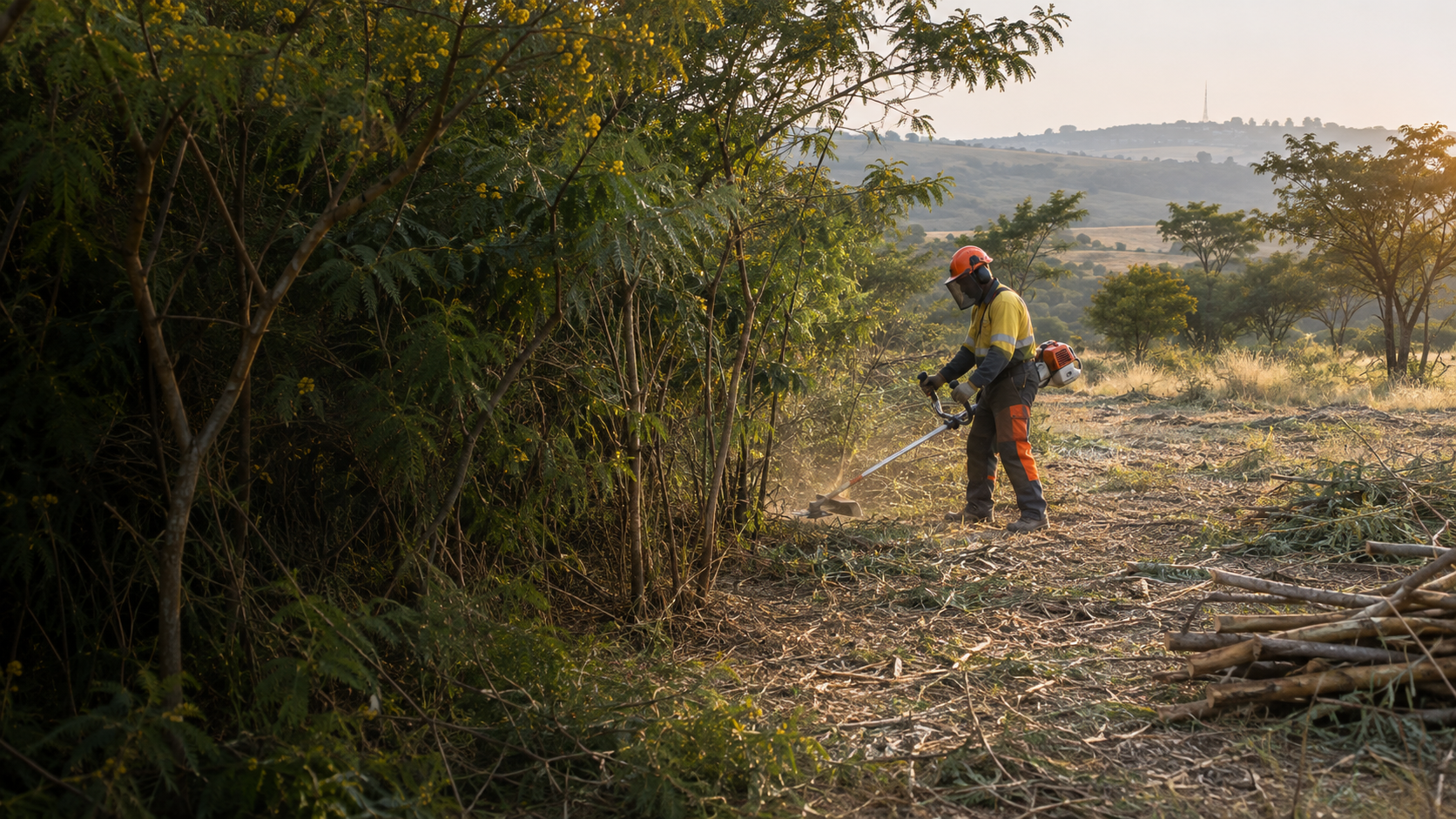
Mechanical clearing, manual labour or both
Machinery can reduce dense woody growth on suitable, accessible ground. Manual teams can work selectively around retained trees, infrastructure and areas where machinery is unsuitable, using hand tools, clearing saws or chainsaws. A combined approach can handle the main clearance mechanically and finish sensitive or awkward areas by hand. Cutting alone may leave living stumps, roots or a soil seed bank, so the initial work and subsequent control must be planned together.
Veld and ongoing terrain management
For open veld, grazing areas and general property management, the objective may be to reduce invasive cover, restore access and maintain manageable vegetation while retaining appropriate indigenous plants and ground cover. The plan should address erosion, accumulated cut material and recurring invasion. Clearing intensity and maintenance visits are agreed to suit the property and the client's priorities.
Preparing land for commercial crop production
Where the objective is a cultivated field or cropland, define the required finish before quoting: handling of felled timber, stumps and roots; machinery access; and the condition in which the site will be handed over. Initial vegetation clearing is only one stage of agricultural preparation. Soil suitability, drainage, erosion control and subsequent cultivation need separate planning with the farmer and appropriate specialists. Any required land-use or environmental approvals must be confirmed before conversion begins; removing invasive trees does not itself authorise conversion to cropland.
Follow-up that responds to the species
Inspect cleared areas for seedlings, stump coppice and root suckers. Depending on the species and site, follow-up may involve hand removal, repeated cutting or targeted treatment using an appropriately registered herbicide in accordance with its label and applicable requirements. Recutting alone is not effective for every species. Keep records of the areas treated and regrowth observed, then adjust the timing and method. Plan for several years where necessary, with the duration and frequency guided by regrowth, the seed bank, neighbouring infestations and the agreed land-use objective.
What the species category means
The plant's legal listing determines which duties, restrictions or permit conditions apply. Its biology determines how it responds to cutting or treatment. Both must be checked: a legal category is not a treatment prescription. Confirm identification and any location-specific conditions before selecting the control method.
Methodology informed by Working for Water control guidance and DFFE's integrated clearing approach. Programme scope, treatment responsibilities and follow-up visits are agreed in the quotation.